Few things are as frustrating as opening your dishwasher expecting sparkling plates, only to find them covered in grit, grease, or cloudy film. If your dishwasher is leaving dishes dirty, it doesn’t necessarily mean you need a new appliance. Often, the culprit is a simple maintenance issue or a minor loading error.
Here is a breakdown of why your dishwasher isn’t cleaning properly and the step-by-step solutions to fix it.
A Clogged Filter
The filter is your dishwasher’s first line of defense, designed to trap food particles and debris. If it hasn’t been cleaned recently, those trapped particles recirculate onto your “clean” dishes during the rinse cycle. Over time, a thick layer of organic sludge and grease can form, preventing water from draining efficiently and leaving a gritty residue on your glassware. Maintaining a clear filter is the most effective way to ensure hygiene.
The Fix
Locate the filter at the bottom of the tub, usually a twist-off cylinder. Remove it carefully and rinse it under hot running water. Use a soft-bristled brush and mild dish soap to scrub away any greasy buildup or stubborn mineral deposits. Ensure the mesh is completely clear before locking it back into place to restore full cleaning power.
Blocked Spray Arms
Dishwashers rely on pressurized water spraying from rotating arms to scrub the dishes. Over time, tiny holes in these arms can become blocked by food waste, seeds, or mineral deposits from hard water. When these nozzles are obstructed, the water pressure drops significantly, and certain areas of the dishwasher remain “dead zones” where dishes receive little to no cleaning action, leading to inconsistent results.
The Fix
Carefully remove the upper and lower spray arms according to your manual. Use a toothpick, small wire, or an unbent paperclip to poke out any visible debris from the nozzles. Shake the arm to ensure nothing is rattling inside, then rinse it thoroughly under a high-pressure faucet. Reinstall the arms and spin them manually to ensure they move freely.
Low Water Temperature
To effectively dissolve modern detergents and break down animal fats, water needs to reach at least 120°F (49°C). If the water enters the machine too cold, the chemical reactions required to strip grease won’t occur, often leaving a dull, oily film on plastic containers and cutlery. Many homeowners don’t realize that their water heater settings or long pipe runs can cause the first fill cycle to be lukewarm.
The Fix
Before starting your dishwasher, run the kitchen sink faucet until the water feels hot to the touch. This clears the cold water sitting in the pipes so the machine begins its cycle with immediate heat. Additionally, check your home’s water heater setting to ensure it is at the recommended 120°F for optimal appliance performance and sanitation levels.
Hard Water Mineral Buildup
If you notice a white, cloudy film on your glasses or a chalky residue on the interior walls, you likely have hard water. Mineral deposits like calcium and magnesium can coat the internal heating element and spray nozzles, reducing efficiency. Hard water also interferes with how detergent suds, making it much harder for the soap to “grab” onto food particles and wash them away properly.
The Fix
Fill a dishwasher-safe bowl with two cups of white vinegar and place it upright on the top rack of an empty machine. Run a heavy-duty cycle without detergent. The acidity of the vinegar safely dissolves limescale and mineral buildup throughout the system. For ongoing protection, consider using a specialized rinse aid or a water-softening salt if your model allows.
Improper Loading Techniques
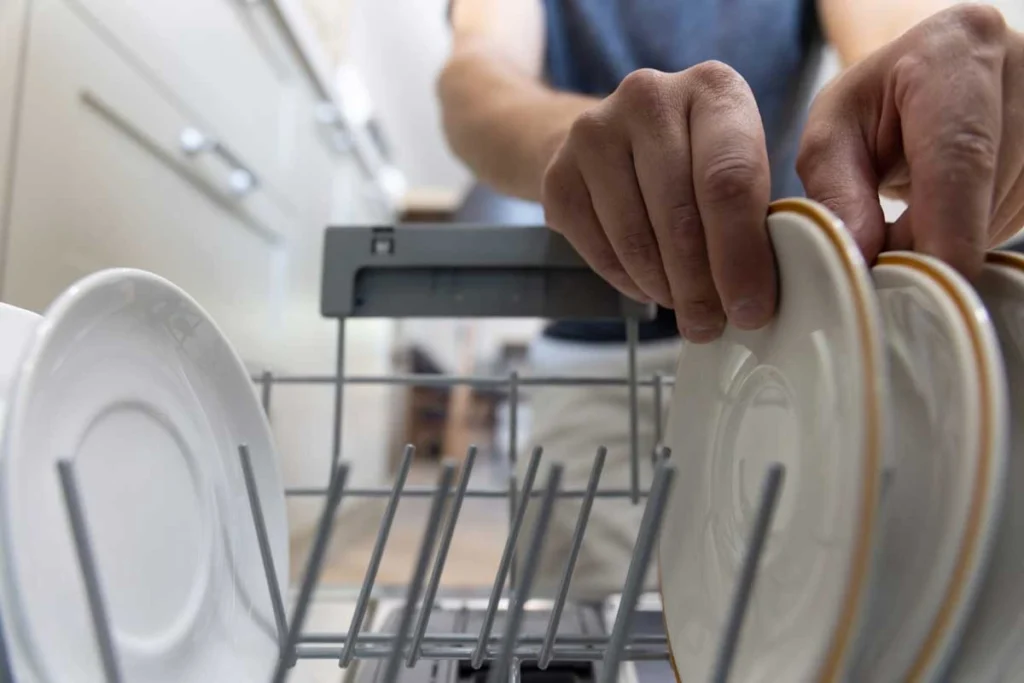
Sometimes the issue isn’t mechanical—it’s spatial. Overcrowding the racks or “nesting” spoons prevents water and detergent from reaching every surface. If a large tray blocks the path of the spray arm or the detergent dispenser door, the cycle is doomed from the start. Professional results require strategic placement to ensure every item has a clear “line of sight” to the rotating water jets and soap.
The Fix
Ensure all soiled surfaces face downward and toward the center spray arm. Space out plates so they don’t touch, and alternate spoons and forks in the cutlery basket to prevent nesting. Double-check that tall items on the bottom rack aren’t obstructing the spray arm’s rotation or blocking the detergent door from popping open during the main wash cycle.
Using the Wrong (or Too Much) Detergent
Cheap detergents or those that have sat in a humid under-sink cabinet can lose their enzymatic power. Conversely, using too much powder or liquid detergent can create excessive suds that actually “cushion” the water spray, reducing its mechanical scrubbing force. This often leaves a soapy, sticky residue on dishes that is difficult to rinse off, making the glassware look streaky and feeling tacky to the touch.
The Fix
Switch to high-quality detergent pods or tablets, which provide a pre-measured dose of concentrated cleaners and enzymes. These are designed to dissolve at specific temperatures for maximum impact. If you prefer powder, use only the amount recommended for your water hardness level. Always store your detergent in a cool, dry place to keep the active ingredients from degrading.
When to Call a Professional?
If you have cleaned the filter, cleared the spray arms, and used a descaler but the dishes are still coming out dirty, you may be facing a mechanical failure such as:
- A failing heating element: Water never gets hot enough.
- A broken wash pump: Water isn’t circulating with enough pressure.
- A faulty inlet valve: The machine isn’t filling with enough water.
Quick Maintenance Checklist
| Component | Maintenance Frequency |
| Filter | Once a month |
| Spray Arms | Every 3–6 months |
| Interior Deep Clean | Every 30 cycles |
| Door Gasket | Wipe down weekly |
Final Thoughts
Maintaining a clean dishwasher is essential for spotless results and appliance longevity. By regularly cleaning the filter, clearing spray arms, and loading strategically, you can resolve most performance issues at home. If these simple steps don’t work, consider professional repair to ensure your kitchen continues to run efficiently and hygienically.