When a major home appliance starts acting up—whether it’s a washing machine that won’t spin or a fridge that’s lost its cool—your first instinct might be to panic. Once the panic subsides, the big question remains: Should you call a repair technician or head to the appliance store?
There is no one-size-fits-all answer, but by following a few industry “rules of thumb,” you can make a choice that protects both your sanity and your wallet.
The 50% Rule
The most reliable metric in the industry is the 50% Rule. It’s a simple calculation:
The Age Factor
Age is the primary indicator of an appliance’s remaining utility. Most major units have a predictable lifecycle, typically ranging from 10 to 15 years. If your machine has crossed the midway point of its expected lifespan, internal components are likely wearing down simultaneously. Investing in a decade-old unit often leads to a cycle of recurring breakdowns and diminishing returns.
The Cost Factor
The financial breaking point for any repair is the 50% threshold. If a technician’s estimate for parts and labor exceeds half the price of a brand-new, comparable model, replacement is the logical choice. Beyond the immediate invoice, consider that new units include fresh warranties and higher energy efficiency, which provides long-term savings that a simple repair cannot offer.
Average Lifespan of Common Appliances
Knowing how long your machines are supposed to last helps you gauge where they are in their lifecycle.
| Appliance | Average Lifespan (Years) |
| Dishwashers | 9–10 |
| Washing Machines | 10–12 |
| Refrigerators | 13–15 |
| Gas Ranges | 15–17 |
| Dryers | 13 |
Consider Energy Efficiency
If your appliance is more than a decade old, a new model will likely be significantly more energy-efficient. Modern Energy Star-certified appliances can save you hundreds of dollars a year on utility bills.
For example, a modern refrigerator uses roughly half the energy of a model from the early 2000s. In this case, even if a repair is “cheap,” the ongoing “energy tax” of an old machine makes replacement more attractive.
The Hidden Costs of Repairing
Before you book a technician, consider these additional factors:
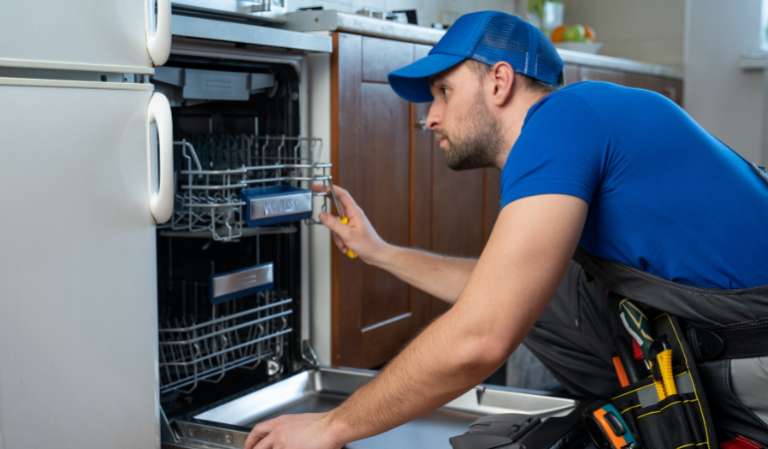
The Diagnostic Fee
The diagnostic fee is the initial cost of professional insight, typically ranging from $75 to $150. While this covers the technician’s travel and expertise, most reputable companies will waive or apply this fee toward the final repair cost if you proceed. Always factor this non-refundable expense into your budget before deciding if a minor fix is worth the professional visit.
Part Availability
For older or discontinued models, part availability can become a major roadblock. As manufacturers shift focus to newer technology, finding specific sensors or control boards for legacy machines often leads to long backorder delays or inflated pricing. If a necessary component is rare or requires a specialized international shipment, replacing the entire unit is usually the faster, more cost-effective solution.
Warranty Status
Always verify your warranty status before making a decision. If your appliance is still covered under the manufacturer’s original term, an extended warranty, or a home protection plan, the cost of parts and labor might be entirely covered. Attempting a DIY fix or hiring an unauthorized technician can void these protections, so check your paperwork to potentially save hundreds.
When to Definitely Repair
Repairing is the winner when:
- The appliance is less than 5 years old.
- It is a high-end, professional-grade model (like Sub-Zero or Wolf).
- The fix is a known, simple DIY task (e.g., replacing a dryer belt or a dishwasher seal).
- The machine is still under warranty.
When to Definitely Replace
Replacement is the winner when:
- The unit has a “critical failure” (e.g., a cracked refrigerator liner or a rusted-out dishwasher tub).
- You are planning a kitchen remodel and want matching finishes.
- The frequency of repairs is increasing (the “lemon” effect).
Final Verdict
If your appliance is old and the repair is expensive, replace it. If it’s relatively new and the fix is minor, repair it. When in doubt, get a professional diagnostic. Often, a technician can tell you if the rest of the machine is in good health or if you’re just putting a bandage on a sinking ship.