Let’s face it: cleaning the oven is near the bottom of everyone’s chore list. Baked-on grease, splattered cheese, and carbonized spills can turn a simple routine into a grueling upper-body workout. Luckily, modern ovens come equipped with built-in features to make the job easier: Steam Clean and Self Clean.
If you’ve ever wondered what the actual difference is between these two cycles—and which one you should use—you’re in the right place. Let’s break down how each feature works, the pros and cons, and which option is best for your kitchen.
Understanding the Self-Clean Cycle
The Self-Clean cycle (sometimes called pyrolytic cleaning) is the heavy-duty heavyweight of oven maintenance.
How it Works?
This cycle locks your oven door and heats the interior to an astronomical 800°F to 900°F (approx. 425°C to 480°C). At this extreme temperature, any residual grease, food particles, and baked-on spills are completely incinerated and reduced to a fine, white ash.
Duration
Usually takes between 2 to 4 hours, plus additional time for the oven to cool down safely before you can unlock the door.
The Aftermath
Once the cycle finishes and the oven cools, you simply open the door and wipe away the leftover ash with a damp cloth or sponge.
Pros of Self-Clean
The self-clean feature transforms a dreaded chore into a hands-off experience. By leveraging advanced pyrolytic technology, modern ovens manage the hardest part of kitchen maintenance automatically, saving you valuable time, physical strain, and the frustration of dealing with stubborn grease manually.
Effortless
Say goodbye to harsh chemical sprays and endless elbow grease. With self-cleaning ovens, you simply lock the door and let extreme temperatures do the heavy lifting. Once the cycle finishes and cools down, you only need to wipe away a fine ash residue effortlessly.
Deep Clean
This high-temperature cycle reaches up to 900°F to completely incinerate months or even years of baked-on carbon, grease, and food splatters. It penetrates areas that manual scrubbing simply cannot reach, restoring your oven interior to a pristine, like-new condition from top to bottom.
Cons of Self-Clean
While the self-clean cycle offers incredible convenience, it comes with notable drawbacks. The extreme heat required to incinerate food residue places significant demands on your appliance and home environment, meaning you should weigh these potential downsides before pressing start on your next heavy-duty cleaning cycle.
High Energy Use
Reaching and maintaining astronomical temperatures between 800°F and 900°F requires a massive surge of electricity. Running this multi-hour cycle can noticeably impact your monthly utility bill, making it a costly choice if performed too frequently compared to standard, energy-efficient cooking methods and routine maintenance.
Heat and Odor
Extreme internal temperatures inevitably radiate into your kitchen, making the room uncomfortably warm during summer. Furthermore, incinerating trapped grease produces thick smoke and strong chemical or burning odors, requiring robust kitchen ventilation and open windows to clear the air safely before cooking again.
Wear and Tear
The intense thermal shock of extreme heat puts immense structural stress on your oven’s internal wiring, control board, and door gasket. Over time, frequent use of the self-clean feature can cause premature component failure, leading to costly appliance repairs or a shortened overall lifespan.
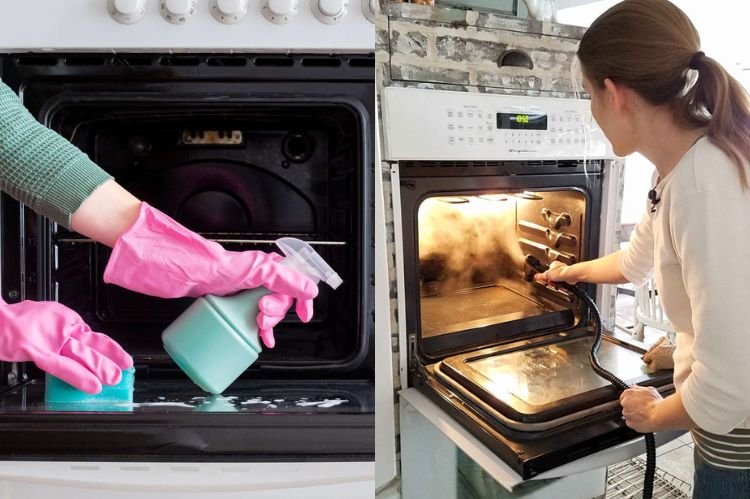
Understanding the Steam-Clean Cycle
The Steam-Clean cycle is a gentler, faster, and more eco-friendly alternative designed for light, routine maintenance.
How it Works?
Instead of relying on searing heat, this cycle uses moisture and low heat (usually around 200°F to 250°F). You pour a designated amount of water (often about a cup) into the bottom of the oven or a special reservoir. The oven heats up just enough to create steam, which softens and loosens light grease and food splatters.
Duration
Typically finishes in 20 to 30 minutes.
The Aftermath
Once cooled slightly, the loosened grime can be easily wiped away with a microfiber cloth or non-abrasive sponge.
Pros of Steam-Clean
Steam cleaning offers a modern, eco-friendly approach to kitchen maintenance. By harnessing the natural power of water vapor and low heat, this innovative cycle makes light cleanup fast, safe, and completely stress-free, keeping your appliance fresh without the intense drawbacks of traditional heavy-duty methods.
Fast and Efficient
Unlike multi-hour cycles, steam cleaning finishes in just 20 to 30 minutes. This speed allows you to quickly tackle recent spills and light messes right after cooking, seamlessly fitting routine maintenance into a busy schedule without tying up your kitchen for half the day.
Gentle on Appliances
Operating at much lower temperatures, steam cycles protect your oven’s sensitive internal components, wiring, and door gaskets from extreme thermal stress. This preservation reduces the risk of premature hardware failure, helping your appliance last significantly longer while maintaining peak performance over the years.
Chemical-Free & Safe
This method relies entirely on pure water and heat, eliminating the need for toxic commercial oven cleaners. You can clean your appliance with total peace of mind, knowing there are no harsh chemical residues or dangerous fumes lingering near the spaces where you prepare meals.
Energy-Friendly
Because the steam cycle requires only minimal heat to vaporize water, it consumes a fraction of the electricity used by pyrolytic self-cleaning modes. This low energy draw keeps your utility bills low, making it an environmentally responsible choice for frequent, everyday kitchen upkeep.
Cons of Steam-Clean
While steam cleaning is fantastic for routine upkeep, it does have specific limitations. Understanding these drawbacks helps set realistic expectations, ensuring you know when a gentle water-based cycle is sufficient and when you might need a heavier-duty approach to tackle stubborn, long-standing kitchen messes.
Surface-Level Results
Steam cleaning is designed strictly for light maintenance and recent spills. It simply lacks the power to break down months of heavy, carbonized grease or baked-on casserole splatters. If your oven has accumulated deep, stubborn grime, a standard steam cycle will not fully restore a pristine interior.
Manual Effort Required
Unlike automated high-heat cycles that completely incinerate residue into ash, steam only softens the grime. You will still need to put in some physical elbow grease, using a microfiber cloth and a non-abrasive sponge to wipe away the loosened food particles and grease manually.
Head-to-Head Comparison
| Feature | Steam Clean | Self-Clean |
| Best For | Light, recent spills and weekly maintenance | Heavy-duty, baked-on grime and deep cleans |
| Time Required | 20–30 minutes | 2–4 hours (+ cooling time) |
| Temperature | Low (~200°F – 250°F) | Extreme (~800°F – 900°F) |
| Energy Usage | Low | High |
| Chemicals Needed | None (just water) | None (pure incineration) |
Which Oven Cleaning Cycle Should You Use?
Choosing the right cycle comes down to the state of your oven and your immediate cleaning goals:
Choose Steam Clean If?
You recently spilled some cheese or casserole sauce, your oven is relatively new or lightly used, or you want a quick, energy-efficient refresh between cooking sessions. Running a steam clean once a month can prevent heavy buildup entirely.
Choose Self Clean If?
You are dealing with months (or years) of dark, carbonized grease, or if you are preparing your kitchen for a big holiday and need a complete reset. Just be sure to remove oven racks beforehand, as the extreme heat can warp them or strip their finish.