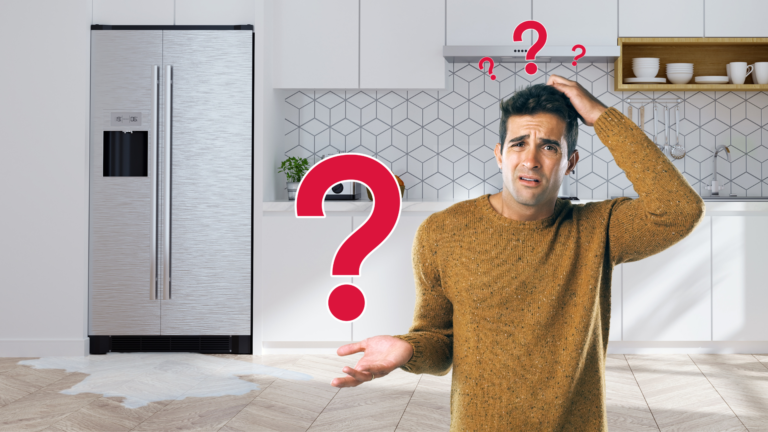
Finding a puddle of water beneath your refrigerator is never a welcome surprise. Beyond the annoyance of daily mopping, pooling water can warp kitchen flooring, damage cabinetry, and even cause mold growth if left unchecked. Fortunately, not every refrigerator leak requires an expensive service call.
Let’s break down the most common reasons water is pooling under your fridge and how you can troubleshoot the issue.
Clogged or Frozen Defrost Drain
This is the single most common cause of internal and external refrigerator leaks. During the automatic defrost cycle, melted frost flows through a small drain tube into a pan beneath the appliance.
The Problem
If food particles, mold, or ice clog this tube, the water has nowhere to go. It backs up, overflows inside the freezer or fresh food compartment, and eventually leaks out onto your kitchen floor.
The Fix
Unplug your fridge, locate the drain hole (usually at the back wall of the freezer), and use a turkey baster filled with warm water to flush out the clog.
Damaged or Loose Water Supply Line
If your refrigerator features an ice maker or a through-the-door water dispenser, it is connected to a water supply line via copper or plastic tubing.
The Problem
Over time, vibrations from the compressor can cause fittings to loosen. Alternatively, older plastic lines can crack, or the valve connection can wear out.
The Fix
Pull the refrigerator out carefully and inspect the water line coming out of the wall. Check for moisture along the length of the tubing and tighten any loose compression fittings. If the line is cracked, it must be replaced immediately.
Faulty Water Inlet Valve
The water inlet valve controls the flow of water into your ice maker and water dispenser.
The Problem
If the valve develops a crack, or if the internal seal fails, it will constantly leak water—even when the ice maker isn’t actively cycling. You will often notice water dripping down the back of the fridge.
The Fix
Inspect the valve (usually located near the bottom rear panel). If you spot mineral buildup or active dripping, the valve will need to be replaced.
Cracked or Misplaced Drain Pan
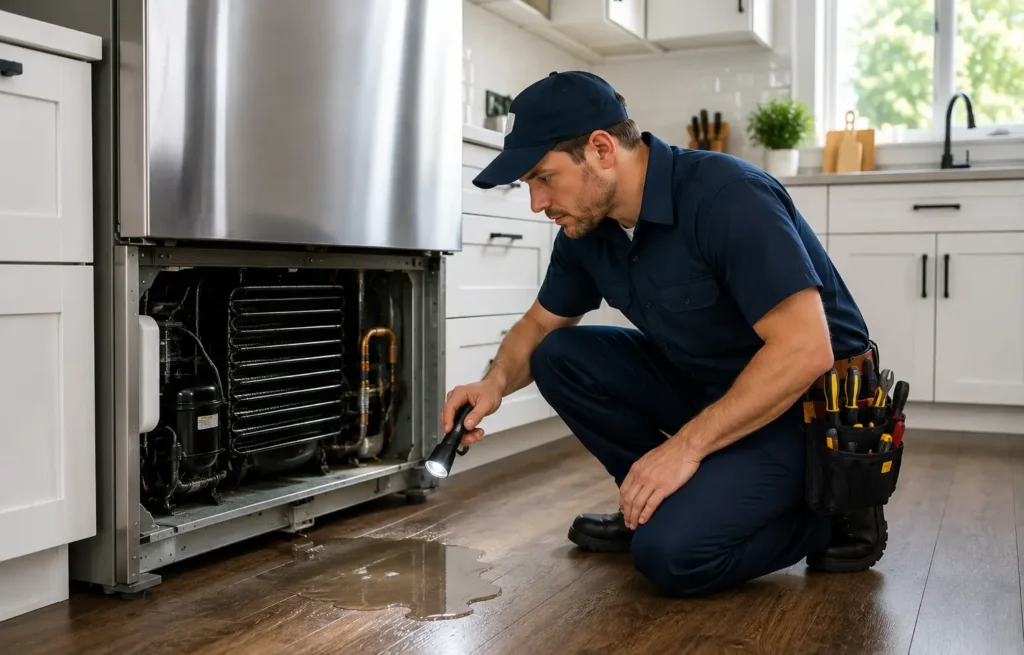
The drain pan sits directly beneath the refrigerator, catching condensation that evaporates via airflow from the condenser coils.
The Problem
If the pan gets shifted out of place during cleaning or maintenance, dripping water misses the basin entirely. Over years of use, plastic pans can also develop hairline cracks.
The Fix
Slide the bottom front grille off, check the position of the pan, and inspect it for cracks using a flashlight.
The Refrigerator Is Not Level
Gravity plays a huge role in proper drainage.
The Problem
If your refrigerator tilts forward ever so slightly, water may fail to reach the defrost drain properly, spilling over the internal edges.
The Fix
Use a carpenter’s level on top of the appliance. Adjust the leveling legs at the front base until the fridge tilts slightly backward, ensuring gravity helps condensation flow toward the drain.
When to Call a Professional?
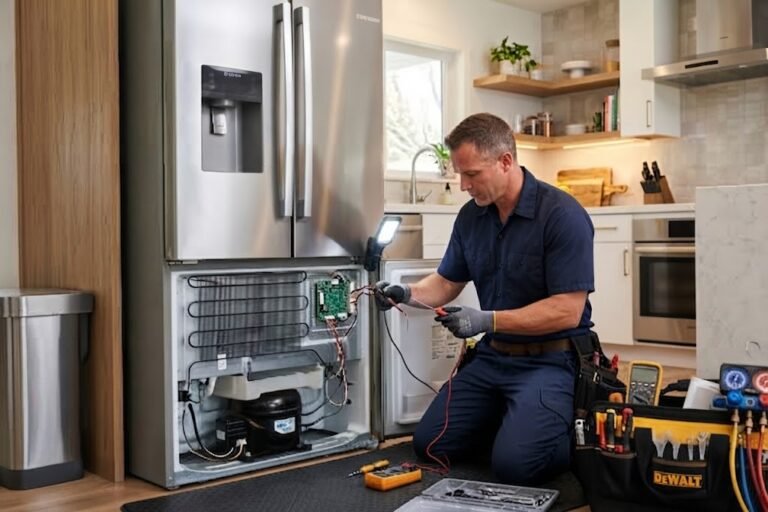
While troubleshooting a clogged defrost drain or leveling your appliance is a great DIY weekend project, some issues require a licensed expert. If you are dealing with persistent electrical issues, a malfunctioning control board, or complex internal plumbing leaks, it’s best to call a reliable appliance repair technician to protect your investment.