There are few household annoyances quite as frustrating as hauling a basket of wet clothes to the laundry room, only to find that your dryer refuses to cooperate. Whether your clothes are still damp after a full cycle or the machine won’t turn on at all, a malfunctioning dryer can instantly halt your household routine.
Before you panic—or immediately look into buying a brand-new appliance—take a breath. Many common dryer issues can be easily diagnosed, and some can even be fixed with a quick DIY approach.
In this blog, we’ll walk you through the top signs your dryer needs attention, how to troubleshoot the root cause, and when it is time to call in a professional for dryer repair.
The Dryer Runs, But Clothes Stay Damp (No Heat)
Nothing is more frustrating than running a full cycle only to pull out cold, soggy laundry. When your drum tumbles normally but provides zero warmth, you are likely dealing with an airflow blockage or a primary heating failure that requires immediate troubleshooting.
The Culprit
The usual suspect behind a cold dryer is restricted airflow caused by lint buildup in the trap or exhaust vent. When air cannot escape freely, the heating element safely shuts down to prevent fires, leaving your clothes trapped in a chilly cycle.
How to Fix It?
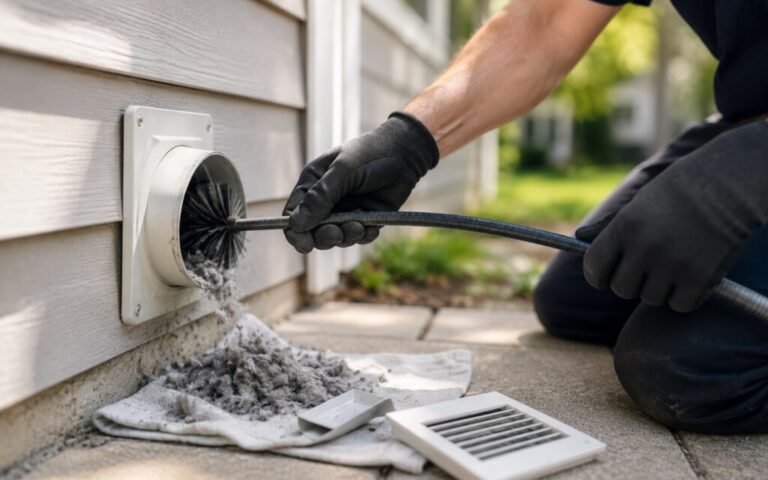
Start by thoroughly cleaning your lint filter after every single load. Next, inspect your exterior exhaust vent to ensure it is completely free of blockages, crushed hoses, or heavy lint clogs that restrict vital airflow out of your home.
Internal Issues
If your vents are spotless and airflow is strong, the problem is likely internal. A blown thermal fuse, a faulty cycling thermostat, or a broken heating element can cut off power to the heat source, requiring a multimeter test and professional replacement.
The Dryer Won’t Start At All
You load your laundry, press the start button, shut the heavy door, and encounter absolute silence. A completely dead dryer instantly disrupts your routine. This frustrating issue typically points to an interruption in your home’s electrical supply, a safety mechanism failure, or a worn-out internal switch that prevents the machine from receiving power.
The Culprit
The usual suspect behind a non-responsive dryer is a tripped circuit breaker, a loose power cord, or a faulty door switch. If the safety mechanism around the door frame fails to engage properly, the appliance assumes the door is open and refuses to run.
How to Fix It?
Verify that the power cord is plugged firmly into the wall outlet. Next, check your home’s electrical panel for a tripped breaker. Inspect the door switch manually to ensure it clicks securely when closed.
When to Call a Pro?
If your electrical supply and door switch are working perfectly, the issue may stem from a defective start switch, a failed control board, or a burnt motor. Contact a professional technician to safely diagnose and repair these complex internal components.
The Drum Won’t Spin (But the Motor Hums)
If you press start and hear the motor humming away happily, but the internal drum remains stubbornly still, you are facing a mechanical failure. While the motor is attempting to do its job, the power isn’t successfully transferring to turn the heavy metal drum filled with your wet laundry.
The Culprit
The primary suspect is almost always a snapped, stretched, or slipped dryer belt. Over years of heavy cycles, the rubber belt wrapping around the drum wears out, loses its grip, or snaps completely.
How to Fix It?
Replacing a broken dryer belt is a common DIY repair. You will need to disconnect the power, remove the cabinet panels, and loop a new replacement belt securely around the drum and motor pulley.
Other Possibilities
If the belt is intact, worn drum rollers, a broken idler pulley, or a seized motor could be locking up the drum. If tackling these internal components feels overwhelming, a professional technician can quickly swap them out.
Disturbing Squeaks, Thumps, and Grinding Noises
Your dryer should operate with a smooth, steady hum. If your appliance starts sounding like a squeaky toy, a metallic workshop, or a heavy drumbeat, do not ignore it. Strange noises are an early warning sign of friction and mechanical wear.
The Culprit
The usual suspect is foreign objects, such as loose coins, screws, or bra underwires, slipping into the drum gaps. Alternatively, severely worn-out internal moving components like glide bearings or support rollers can lose their lubrication and grind together.
How to Fix It?
Inspect the drum interior and lint trap area thoroughly for trapped items. If the squeal persists, you will need to open the cabinet to lubricate, adjust, or replace damaged rollers and worn axles to restore quiet, smooth rotation.
Pro Tip
Never ignore strange grinding noises. Letting a worn roller or bearing grind down can permanently damage your motor assembly, turning an inexpensive DIY fix or simple part replacement into a costly service call or forcing you to buy a brand-new dryer.
Should You DIY or Call a Professional?
While cleaning your lint traps, scrubbing chemical residue off your moisture sensors, or replacing an exterior vent hose are fantastic DIY tasks, internal mechanical and electrical work requires caution.
Modern dryers combine high-voltage electricity (or gas lines) with moving parts, making safety paramount. If you are dealing with complex internal wiring, gas valve issues, or persistent thermal fuse blowouts (which indicate dangerous overheating), it is always safest to contact a certified local appliance repair expert.
Proper maintenance and timely repairs will not only extend the lifespan of your dryer by years—they will also protect your home from potential fire hazards.