Finding a puddle of water on your kitchen floor can be stressful, but don’t panic! A leaking refrigerator is a common household issue, and the source is often easier to resolve than you might think.
Top Culprits Behind Refrigerator Leaks
Understanding why your fridge is leaking is the first step toward a dry kitchen floor. The most frequent causes include:
Clogged Defrost Drain
One of the most frequent culprits behind a mysterious kitchen puddle is a clogged defrost drain. Over time, tiny food particles, dirt, and frost can build up and block the drainage tube located at the back of your freezer. When this happens, normal defrost water cannot reach the drip pan. Instead, it overflows inside the compartment, pooling at the bottom or leaking onto your floor.
Damaged Door Gaskets
Your refrigerator door gaskets—the flexible rubber seals lining the perimeter of the doors—play a crucial role in keeping the interior cold. If these seals become cracked, warped, or caked in sticky food residue, they fail to close tightly. This allows warm, humid kitchen air to seep inside, creating excessive condensation. As this moisture accumulates and melts, it frequently drips down the front or sides of the appliance.
Faulty Water Inlet Valve
If you notice water pooling directly underneath or behind your refrigerator, a faulty water inlet valve could be to blame. This valve supplies water to your ice maker and water dispenser. If the valve cracks, becomes loose, or suffers from a mechanical failure, it can leak continuously. Because this component is connected directly to your home’s water supply line, addressing a failing valve quickly prevents serious water damage.
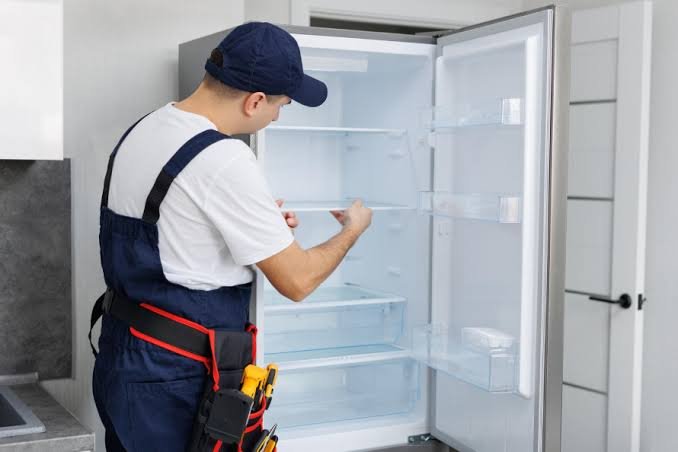
Simple DIY Fixes You Can Tackle
Before calling for professional help, try these quick troubleshooting steps:
Flush the Drain
If a clogged defrost drain is causing your leak, flushing it is a simple DIY fix. First, unplug your refrigerator and clear out any items blocking the freezer’s back panel. Fill a turkey baster or small squeeze bottle with warm water and gently squirt it into the drain opening. You can also use a pipe cleaner or a mix of warm water and a little dish soap to loosen stubborn ice and debris blockages.
Level the Appliance
An unlevel refrigerator can easily prevent doors from sealing correctly and disrupt internal drainage flow. Grab a bubble level and place it on top of the unit. If the bubble isn’t centered, adjust the front leveling legs by turning them clockwise or counterclockwise. Ensure the fridge tilts slightly backward; this gravity assist ensures the doors swing shut securely on their own and meltwater flows properly into the drip pan.
When to Call a Professional Repair Expert?
While minor clogs and leveling issues are easy to manage, some situations require a professional touch. Call a repair expert if you notice:
- Persistent internal leaks coming from sealed cooling lines or a cracked internal reservoir.
- Electrical malfunctions, such as a failing defrost timer or malfunctioning heating elements.
- Unresolved puddles underneath the unit despite clearing the drain lines and checking your supply valves.