It is one of the most frustrating kitchen emergencies: you pop your leftovers into the microwave, listen to it hum for two minutes, and pull out food that is still ice-cold. The light is on, the plate is spinning, but there is zero heat.
Before you assume your appliance has completely given up and rush out to buy a new one, take a deep breath. A microwave not heating is a very common issue, and the culprit is often a single, replaceable part.
This guide breaks down the top reasons your microwave is failing to heat, how to troubleshoot them safely, and when it is time to call in a professional (or buy a replacement).
Important Safety Warning First
Microwaves contain a component called a high-voltage capacitor. Even when the microwave is unplugged, this capacitor can store a lethal electrical charge. Never open the internal casing of a microwave unless you are a trained professional or know how to safely discharge the capacitor. If you are unsure, stick to external checks like fuses and door switches, and leave internal repairs to an expert.
A Blown High-Voltage Fuse
Inside your microwave, a high-voltage fuse serves as a vital safety barrier designed to protect the appliance from dangerous electrical surges. If an unexpected power spike occurs, this specialized fuse sacrifices itself by blowing, which immediately cuts power flow to the magnetron. This stops heat production entirely, safeguarding your kitchen and preventing severe electrical damage to other internal components.
The Problem
When the high-voltage fuse blows, the microwave instantly loses its ability to generate heat. Even though electricity still flows to the control panel, lights, and turntable motor, the critical circuit powering the magnetron remains permanently broken, rendering your appliance incapable of cooking or warming any food items.
The Symptoms
You will notice the control display lights up normally, buttons respond to your touch, and the glass tray spins when you start a cycle. However, when the timer finishes, your food remains completely cold, showing zero signs of internal warming or cooking activity.
The Solution
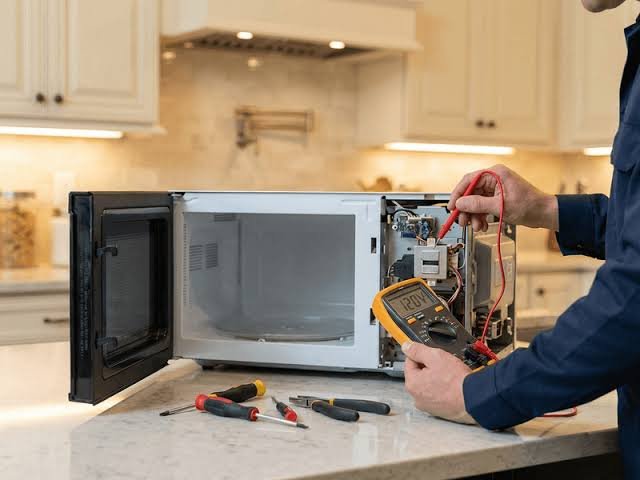
A technician must test the fuse with a multimeter and replace it. Crucially, a blown fuse often signals a deeper issue, like a bad door switch or failing magnetron, which must be fixed too.
A Faulty Door Interlock Switch
Microwaves rely on a sophisticated system of multiple door interlock switches to ensure safe operation. These tiny mechanical switches communicate directly with the control board, confirming whether the door is securely and tightly closed before allowing high voltage to flow into the cooking cavity. If any single switch becomes misaligned, worn out, or physically broken, the safety interlock mechanism halts the heating process completely.
The Problem
A faulty door switch tricks the microwave into believing the door is still open, even when it is latched shut. Because safety protocols prioritize preventing radiation leakage, the control board disables the magnetron to block heating, rendering the appliance completely useless for warming food despite appearing operational.
The Symptoms
The interior light turns on, the control panel accepts your programming inputs, and the turntable spins normally. Yet, when the cooking cycle ends, your food is completely cold. You might also notice the door feels slightly loose or lacks a distinct click.
The Solution
A qualified repair technician must test the door switches using a multimeter. Once the malfunctioning switch is identified, it can be safely replaced or realigned to restore normal microwave heating functionality.
A Defective Magnetron
The magnetron serves as the absolute powerhouse of your microwave, functioning as a specialized vacuum tube that efficiently converts electrical energy into high-frequency microwaves to cook food. Over years of regular heavy use, or if the appliance is accidentally run while completely empty, this vital internal component can degrade, overheat, or burn out permanently, completely destroying the unit’s core ability to generate heat and cook meals.
The Problem
When a magnetron fails or burns out internally, it can no longer generate the microwave radiation waves needed for cooking. The internal vacuum tube completely loses its structural integrity, meaning electrical current passes right through without creating any heat energy whatsoever inside the main cooking cavity of the kitchen appliance.
The Symptoms
You might hear a loud, highly abnormal buzzing or deep humming noise immediately when you start the appliance. Sometimes, a distinct burning smell or visible electrical sparking accompanies this failure. The control panel, interior lights, and glass turntable all function properly, but your food stays completely cold.
The Solution
Replacing a burned-out magnetron requires carefully handling dangerous high-voltage internal components, making it risky for untrained DIYers. Because replacement magnetron parts are often quite expensive, purchasing a brand-new microwave is frequently more cost-effective than paying for a professional repair service on an older standard countertop unit.
A Broken Diode
The high-voltage diode is a crucial electrical component that works closely alongside the capacitor to convert alternating current into direct current, effectively doubling the voltage sent to the magnetron. Without a functioning diode, the magnetron lacks the necessary electrical power to generate heat. Over time, these diodes can short out, burn out, or degrade internally due to normal wear and tear, leading to sudden heating failure in your kitchen microwave.
The Problem
When a diode shorts out or breaks completely, it heavily disrupts the internal high-voltage circuit. The magnetron fails to receive the required high-voltage direct current power it desperately needs, halting microwave energy generation entirely while leaving the rest of the unit’s standard electrical systems fully operational and working normally today.
The Symptoms
The appliance looks completely normal during use. The control panel works, the interior light shines brightly, and the turntable spins smoothly. However, your food always stays completely cold. Additionally, a broken diode can trigger an unusual buzzing sound or cause the primary high-voltage fuse to blow out completely without warning.
The Solution
A qualified technician must test the diode using a multimeter to check for continuity and electrical shorts. Because diodes are relatively inexpensive parts, replacing a faulty one is straightforward and affordable, making it a highly worthwhile repair that restores your microwave to full working order safely once again right now.
Control Board or Transformer Issues
The main control board acts as the central electronic brain of your microwave, managing cooking times, sensor inputs, and power relays, while the high-voltage transformer steps up electrical voltage to power the magnetron. When either of these critical components fails, malfunctions, or suffers from fried internal circuits, the entire appliance loses its ability to properly regulate power or transmit the necessary high-voltage electricity needed for cooking food.
The Problem
A damaged control board relay fails to send voltage signals to the transformer. Meanwhile, a burned-out transformer cannot step up power. Without proper communication or electrical boosting between these two core parts, the magnetron is completely starved of the high-voltage juice required to heat anything inside the cooking cavity.
The Symptoms
You might experience erratic digital display behavior, completely unresponsive buttons, or a microwave that runs its countdown timer and turns on its lights normally while leaving your food totally cold. Sometimes, a strong burning electrical odor or faint crackling sound emits from behind the control panel area during operation.
The Solution
Repairing control boards or replacing fried transformers involves complex electrical work and expensive parts. For standard countertop microwaves, buying a brand-new unit is usually far more cost-effective than professional repair. However, if you own an expensive built-in model, hiring a certified appliance technician to replace the faulty component makes sense.
Quick Troubleshooting Checklist
Before calling a repair service, run through these quick diagnostic checks:
- Check the Power Supply: Is it plugged in securely? Did a circuit breaker trip?
- Test the Door: Open and firmly shut the door to ensure the latches click into place properly.
- Clear Error Codes: Unplug the microwave for 60 seconds to reset the internal computer, then plug it back in.
Should You Repair or Replace Your Microwave?
For countertop microwaves, professional labor and parts costs can often exceed the price of a brand-new unit (which typically ranges from $70 to $200). If your microwave is over 5 to 7 years old and the magnetron or control board has failed, replacement is usually the smartest financial choice.
However, if it is a built-in model or an over-the-range microwave—which can cost hundreds of dollars to replace and install—hiring a technician to swap out a fuse, diode, or door switch is well worth the investment.