There is nothing quite like finishing a low-country boil or a family seafood dinner only to realize you are facing a sink full of pots, pans, and plates—and your dishwasher has decided to go on strike.
In a busy Lowcountry household, a reliable dishwasher isn’t a luxury; it’s a daily necessity. But how can you tell when your appliance is just acting up versus when it’s waving a red flag for professional dishwasher repair in Charleston, SC?
Catching the warning signs early can save you from costly water damage, ruined kitchen floors, and the hefty price tag of buying an entirely new unit. Here are the top signs your dishwasher is telling you it’s time to call a local repair technician.
Standing Water at the Bottom
Open your dishwasher at the end of a cycle. Is there a pool of murky water sitting at the bottom? While a tiny bit of moisture can occasionally happen, standing water usually points to a deeper issue.
The Culprit
What causes these stubborn blocks? Usually, it is a buildup of grease, food particles, and mineral deposits over time. Sometimes, a kinked drain hose or a mechanical failure in the drain pump prevents water from exiting properly, leaving your machine stagnant and unable to clean correctly.
The Charleston Factor
Charleston’s unique coastal environment and high usage can accelerate plumbing wear. Hard water mineral deposits and humidity cause food debris to break down sluggishly, creating stubborn clogs faster than normal. Local homes need appliances that can withstand these specific regional wear-and-tear challenges every single day.
Puddles and Leaks on the Kitchen Floor
Water where it should never be is an immediate red flag. If you notice a persistent puddle or dampness forming around the base of your dishwasher during or after a cycle, do not simply brush it off as an accidental splash. It points to an underlying plumbing or sealing issue that requires a prompt professional inspection.
The Culprit
Common sources of floor leaks include worn-out, cracked rubber door gaskets, a loose or damaged water inlet valve, or a fractured internal tub basin. Over time, constant water pressure and normal wear compromise these seals, allowing water to escape onto your flooring every single time you run a wash cycle.
Why It’s Urgent?
Ignoring hidden kitchen leaks can lead to severe structural damage, warped flooring, and hazardous mold growth beneath your cabinets. Addressing moisture issues early prevents expensive subfloor repairs, protects your home’s integrity, and saves you from dealing with major water damage restoration bills down the road.
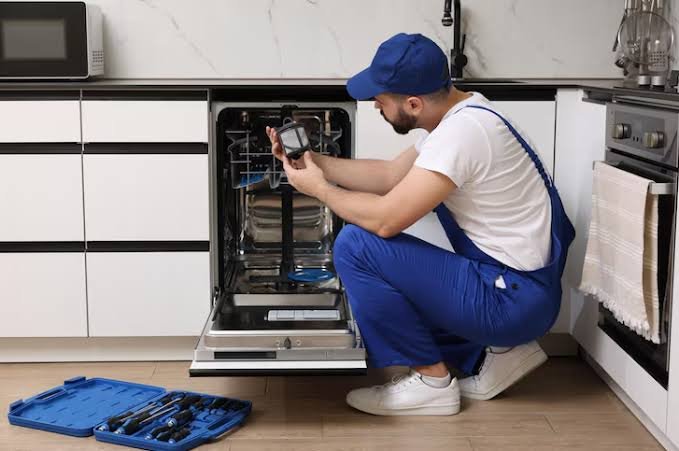
Dishes Coming Out Dirty or Gritty
You should never have to re-wash your plates by hand after running a full cycle. If your glassware comes out cloudy, silverware has a film, or dinner plates still have baked-on food particles stuck to them, your dishwasher is failing to clean properly. This frustration means your appliance is just recycling dirty water instead of sanitizing your dishes efficiently.
The Culprit
Common culprits include clogged spray arms blocked by food debris, a malfunctioning heating element preventing proper water temperature, or a weak circulation pump. Without adequate heat and water pressure, detergents cannot dissolve grease effectively, leaving a gritty residue behind.
Strange Grinding or Loud Humming Noises
Modern dishwashers are designed to run quietly in the background of your home. If your machine suddenly starts sounding like an industrial construction zone, producing loud grinding, high-pitched squealing, or continuous buzzing noises, it is signaling a serious mechanical distress. Ignoring these unusual sounds will only cause the problem to escalate quickly, turning a simple fix into a total motor breakdown.
The Culprit
Loud noises usually point to foreign objects, like broken glass or food bones, trapped in the drain pump impeller. Alternatively, worn-out motor bearings or a failing circulation pump can create these harsh sounds. Continuing to run a noisy appliance can completely burn out the motor, making immediate professional diagnosis essential.
The Dishwasher Refuses to Start
You press the power button, load your detergent, select your favorite heavy-duty cycle, and press start—only to be met with complete silence. No flashing lights, no comforting hum, and zero action from the machine. When your dishwasher completely refuses to cooperate or respond to your inputs, it brings your kitchen routine to an abrupt halt and demands troubleshooting.
The Culprit
This total lack of power usually stems from a tripped circuit breaker, a faulty door latch preventing safety engagement, or a dead control board. If resetting your breaker box fails, internal electrical components or thermal fuses have likely failed.
Should You Repair or Replace Your Dishwasher?
As a general rule of thumb, if your dishwasher is less than 8 to 10 years old and the repair cost is less than half the price of a brand-new replacement, repairing it is usually the smartest and most cost-effective choice.
If you’re noticing any of these issues in your Charleston home, don’t wait for a small leak to turn into a kitchen remodeling emergency. Reach out to a trusted, local Charleston appliance repair professional to diagnose the problem, get upfront pricing, and get your kitchen back in smooth working order.