Finding a puddle of water on your kitchen floor after running a cycle is never a welcome surprise. Dishwasher leaks can range from a minor inconvenience to a major headache that threatens your flooring and cabinetry.
Fortunately, many dishwasher leaks stem from simple, fixable issues rather than a failing appliance. Here is a breakdown of the most common causes behind dishwasher leaks and step-by-step guidance on how to fix them.
Worn or Damaged Door Gasket
The rubber seal around your dishwasher door prevents water from escaping during cycles. Over time, this gasket dries out, cracks, or collects grime, creating gaps. Inspect the seal for visible damage and clean it regularly. If it feels brittle or shows tears, pull it out and press a brand-compatible replacement firmly into the channel. A fresh seal instantly stops water from splashing onto your kitchen floor.
The Cause
The rubber seal (gasket) running around the perimeter of the dishwasher door prevents water from splashing out during a wash cycle. Over time, this rubber can dry out, crack, warp, or accumulate food residue, creating gaps where water can escape.
The Fix
Inspect the gasket for visible cracks, tears, or brittleness. Clean it thoroughly with warm, soapy water to remove grime. If it is damaged or stiff, gently pull the old gasket out of its channel and press a replacement model (specifically matched to your dishwasher brand) firmly into place.
A Loose or Damaged Water Inlet Valve
This valve controls the water flow from your home supply into the appliance. If fittings loosen from vibrations or the valve body cracks due to age, you will notice puddles forming underneath. Shut off the water supply and remove the lower access panel to inspect it. Tighten loose connections with a wrench, or replace the entire valve assembly if you spot structural cracks causing persistent leaks.
The Cause
The water inlet valve regulates the flow of water from your home supply into the dishwasher. If the valve fittings become loose, or if the valve body cracks due to age, water will leak underneath the appliance near the front or back corners.
The Fix
Unplug the dishwasher and shut off the water supply valve beneath your sink. Remove the lower access panel to inspect the inlet valve. Tighten any loose connection fittings with a wrench. If you notice cracks or persistent leaking directly from the valve body, you will need to replace the assembly.
Faulty Door Latches or Misaligned Doors
When a dishwasher door fails to close completely or latch securely, water can rise high enough to spill over the lower threshold. This often stems from a broken latch or uneven leveling legs. Check if the door clicks tightly shut. Adjust the latch strike plate if necessary, and use a spirit level to ensure the unit is balanced evenly to prevent accidental overflow leaks.
The Cause
If the dishwasher door doesn’t latch completely shut, the water level can rise high enough to spill over the lower edge of the door opening. This often happens if the latch mechanism is broken or if the leveling legs of the dishwasher are misaligned.
The Fix
Check if the door clicks securely shut when closed. If it doesn’t, inspect the latch strike plate and adjust or replace it. Additionally, use a level to ensure your dishwasher is sitting evenly; adjust the leveling legs underneath if the unit leans forward.
Cracked or Loose Drain/Inlet Hoses
Hoses manage clean water intake and dirty water drainage. Years of high pressure and vibrations can loosen hose clamps or cause the rubber to develop pinhole leaks. Remove the kickplate and run a test cycle while inspecting the lines with a flashlight. Tighten any loose clamps immediately, and swap out old hoses showing any signs of bulging, splitting, or cracking to avoid major water damage.
The Cause
Dishwashers rely on hoses to bring clean water in and pump dirty water out. Over years of vibrations and high water pressure, hose clamps can loosen, or the rubber hosing itself can develop pinhole leaks or splits.
The Fix
Remove the lower kickplate and run a short cycle while using a flashlight to look for drips along the fill and drain hoses. Tighten any loose hose clamps with a screwdriver. Replace any hoses showing signs of cracking, bulging, or splitting.
Using the Wrong Type or Amount of Soap
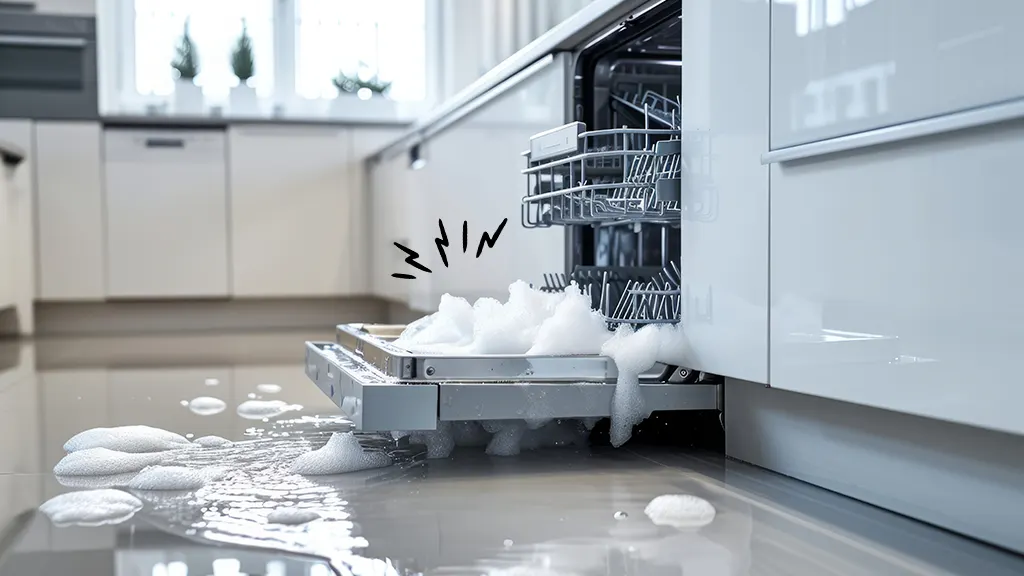
Using regular hand dish soap or overusing automatic detergent creates massive amounts of heavy suds. These bubbles force their way past the door seal and spill onto the kitchen floor. Always use specialized automatic dishwasher detergent in the correct dosage. If suds cause a sudden overflow, sprinkle a small amount of table salt into the bottom tub to break down the foam instantly.
The Cause
One of the easiest leaks to prevent is caused by detergent error. Using regular dish soap (meant for hand washing) instead of automatic dishwasher detergent—or overusing powder/pods—creates a massive amount of suds. These suds push past the door seal and spill onto the floor.
The Fix
Always use detergents specifically formulated for automatic dishwashers. If suds have caused a leak, sprinkle a small amount of table salt into the bottom of the tub to break down the foam, and run a rinse cycle before trying again.
Summary Checklist to Prevent Future Leaks
- Regularly clean food debris off the door seal and filter.
- Avoid overloading dishes, which can block water spray or prevent proper door closure.
- Periodically check under the sink and kickplate for early signs of moisture.