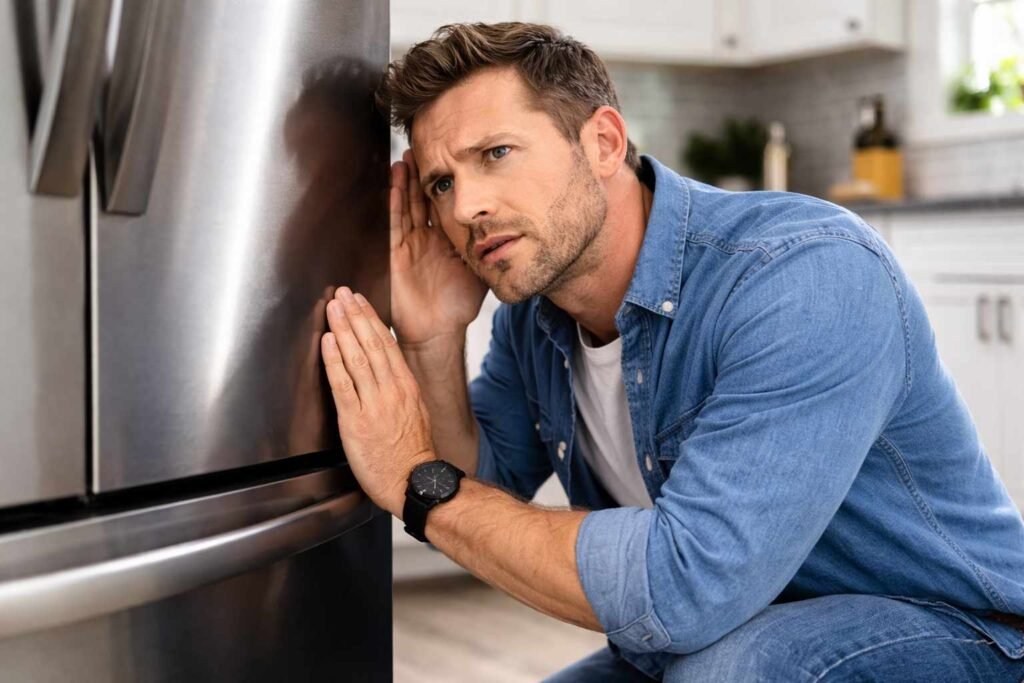
There is nothing quite as unsettling as sitting in a quiet house and suddenly hearing a bizarre buzzing, clicking, or grinding sound coming from your kitchen. While a refrigerator is never completely silent, strange or loud noises are usually a red flag that something needs your attention.
Understanding what those sounds mean can save you from a spoiled batch of groceries or an expensive repair bill. Let’s break down the most common refrigerator noises, what causes them, and how you can fix them.
Humming or Buzzing: The Evaporator Fan
If you hear a steady humming or persistent buzzing coming from inside your freezer compartment, the culprit is usually the evaporator fan. This vital component is responsible for circulating cold air smoothly between the freezer and the fresh food sections. While a faint hum is normal during operation, an unusually loud or intrusive buzzing sound means airflow is restricted, putting heavy strain on the motor.
The Cause
The most frequent cause of a noisy evaporator fan is frost buildup around the blades, often triggered by a faulty defrost timer or a leaky door seal. Alternatively, dust, pet hair, or physical debris can get caught in the fan housing over time, while worn motor bearings create high-pitched vibrations.
The Fix
First, unplug your refrigerator and check the freezer back panel for ice accumulation. If it is frozen over, perform a manual defrost. If the blades spin freely but the noise continues, the motor bearings are likely failing, and you will need to replace the evaporator fan assembly.
Clicking or Ticking: The Start Relay or Defrost Timer
A recurring clicking or ticking sound coming from the lower back section of your appliance is a distinct warning sign. Often accompanied by a failure to cool properly, this acoustic anomaly usually points directly to electrical components struggling to operate. Recognizing this pattern early can prevent total compressor failure and keep your perishable food items safely preserved.
The Cause
The primary cause is a malfunctioning start relay, which assists the compressor motor in powering up. Overheating or electrical wear can damage this small part. Alternatively, a mechanical defrost timer may emit regular clicks as it slowly advances through its daily cycles to melt frost accumulation.
The Fix
Unplug the refrigerator, pull it away from the wall, and remove the rear access panel to locate the compressor. Inspect the start relay; if it rattles when shaken or smells burnt, replace it immediately.
Whining or Buzzing: The Water Inlet Valve
If your kitchen suddenly echoes with a sharp, high-pitched whine or a harsh, vibrating buzz whenever your ice maker cycles or you use the door dispenser, you are likely dealing with a water inlet valve issue. This sound can be startlingly loud, cutting through ambient household noise. It is a clear indicator that water flow is encountering resistance, forcing the mechanical parts to strain awkwardly for supply.
The Cause
The primary culprit is restricted or low water pressure flowing into the refrigerator. Over time, hard water mineral deposits can clog the tiny mesh screen inside the valve. Alternatively, a failing electronic solenoid can cause the valve to flutter rapidly instead of opening smoothly, creating that grating, high-pitched whine.
The Fix
Start by ensuring your home’s main water supply valve is fully open and the supply line isn’t kinked. If the pressure is fine, inspect the valve screen for mineral blockages and clean it out. If the valve itself is damaged or worn out, replacing the component is a straightforward, inexpensive solution.
Rattling or Vibrating: Loose Lines or Placement
Not every irritating appliance sound points to an internal mechanical failure. If you hear a persistent rattling, shaking, or vibrating noise coming from your kitchen unit, the issue might simply be external. These grating sounds often echo through the floor or cabinets, creating an annoying distraction during quiet evening moments. Fortunately, diagnosing this specific type of noise is usually straightforward and rarely requires calling an expensive professional repair technician.
The Cause
The primary cause is improper leveling, which causes the appliance to rock slightly against uneven kitchen flooring. Alternatively, the metal drain pan, refrigerant tubing, or power cords at the back of the unit may be vibrating against the compressor or cabinet walls, creating that particularly irritating metallic rattle sound daily.
The Fix
Adjust the leveling legs located at the front bottom of your refrigerator until the unit sits completely firm on the floor. Next, safely pull the appliance forward and gently bend or reposition any loose copper tubing or vibrating drain pans so they never touch surrounding kitchen cabinet surfaces again today.
Knocking or Banging: The Compressor
The most alarming sound your kitchen appliance can possibly produce is a heavy knocking, thumping, or loud metallic bang, particularly right after the cooling cycle finishes running. This intimidating noise instantly signals trouble deep within the core of your cooling system. Because the compressor is essentially the beating heart of your entire refrigerator, hearing these violent thumps demands your immediate attention, careful troubleshooting, and swift action before total failure.
The Cause
The compressor sits on internal springs designed to absorb vibrations. Over years of heavy operation, these suspension springs can wear out, snap, or slip out of place. When this happens, the compressor motor shakes violently and knocks against its protective metal housing whenever it shuts off.
The Fix
Unfortunately, internal compressor knocking usually cannot be fixed with a simple DIY adjustment. If the mounting springs or the compressor itself are failing internally, you will need to call a certified appliance repair technician. In many cases of advanced compressor wear, replacing the entire unit is ultimately required.
Quick Diagnostic Summary
| Sound | Likely Component | Action Required |
| Humming / Squealing | Evaporator Fan | Check for frost or debris; replace motor if worn. |
| Clicking / Ticking | Start Relay / Timer | Test or replace the start relay near the compressor. |
| High-Pitched Whine | Water Inlet Valve | Check water pressure and clear or replace the valve. |
| Rattling | Loose Panels / Tubing | Level the fridge and adjust vibrating lines. |
| Knocking / Thump | Compressor | Consult a professional technician. |
Conclusion
Ignoring strange refrigerator noises rarely makes them go away—in fact, minor sounds often turn into major appliance breakdowns. By identifying the source of the noise early, you can take action before your food spoils.